
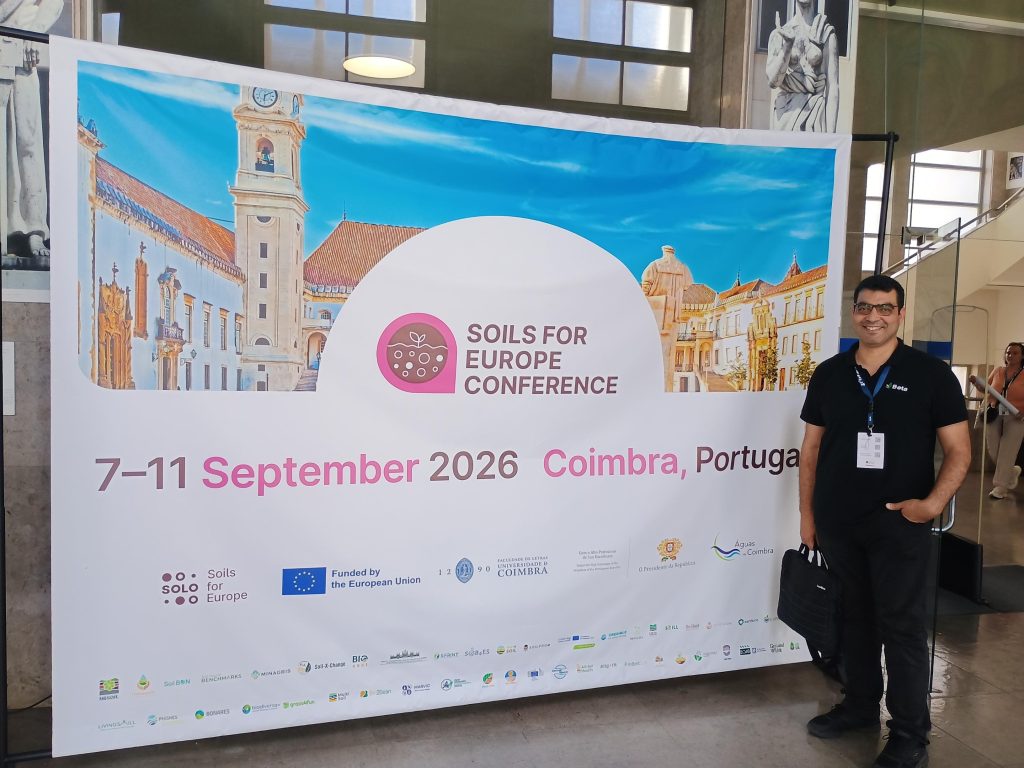
How can agriculture improve fertilisation to better meet crop needs while supporting soil health? This question framed SEACURE’s contribution to the Soils4Europe 2026 Conference on 10 September, where the project brought emerging insights from its soil-specific Tailor-Made Fertilisers (TMFs) into the wider discussion on technologies and innovations for healthier soils.
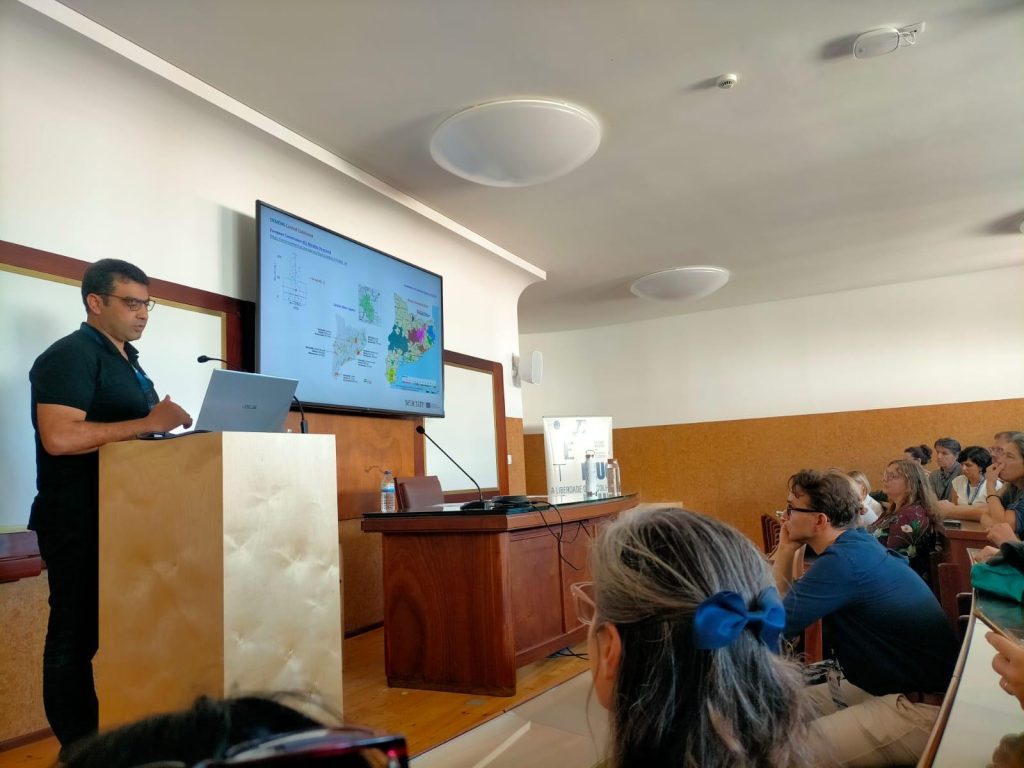
Held from 7 to 11 September in Coimbra, Portugal, the Soils for Europe Conference 2026 brought together the European soil community to exchange on the latest research and practical innovations advancing the EU Mission Soil objectives. Within the session “New technologies and innovations to enhance soil health”, Mohamed Emran, from BETA Technology Centre at UVic-UCC, presented the emerging results from SEACURE’s Tailor-Made Fertilisers (TMFs) validation.
Designing fertilisation around crops and soils
TMFs are one of the nutrient-management solutions being demonstrated in Central Catalonia (DEMO 6) as part of SEACURE’s upstream prevention strategy to reduce nutrient losses from agriculture. The work combines controlled laboratory testing with ongoing field trials under wheat cultivation to examine how different formulations influence carbon turnover, nutrient availability and crop response under real conditions.
TMFs are formulated to meet crop nutrient requirements while accounting for factors such as soil type, fertility status and local conditions. Their development builds on nutrient recovery and circular fertilisation approaches, with the wider objective of improving nutrient-use efficiency and reducing nutrient losses to the environment.
The work presented at Soils4Europe examined a key question: can fertiliser composition influence when and how nutrients become available in the soil?
Similar nutrient targets, different soil responses
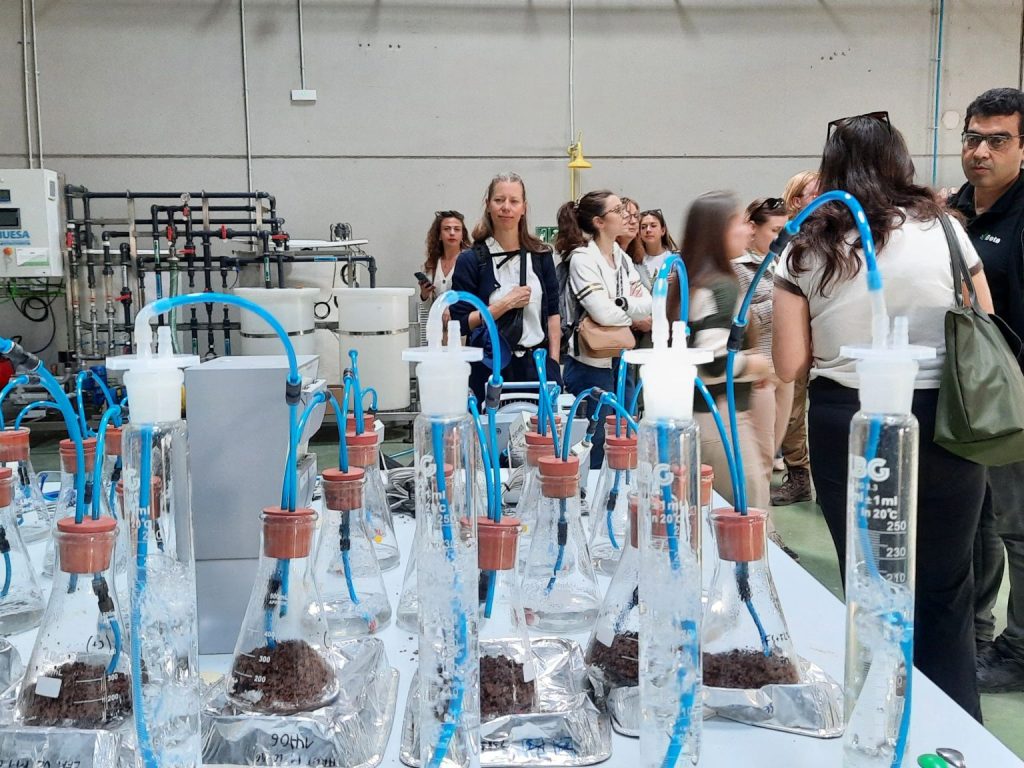
Two formulations, TMF1 and TMF2, were developed with similar target nutrient contents but different functional compositions and assessed through a controlled 90-day soil incubation experiment. Researchers monitored carbon mineralisation, nitrogen transformations and phosphorus availability to understand how each formulation behaved over time.
The two formulations behaved differently in soil: TMF1 showed a more gradual pattern of carbon turnover and nitrate formation, while TMF2 triggered a stronger initial response and made some nutrients, particularly phosphorus, more immediately available.
The comparison highlights an important point: fertilisers with similar nutrient targets do not necessarily behave in the same way once they interact with soil. Their formulation can influence the timing and availability of nutrients, opening the possibility of designing fertilisation strategies that respond more closely to specific soil conditions.
From laboratory validation to the field
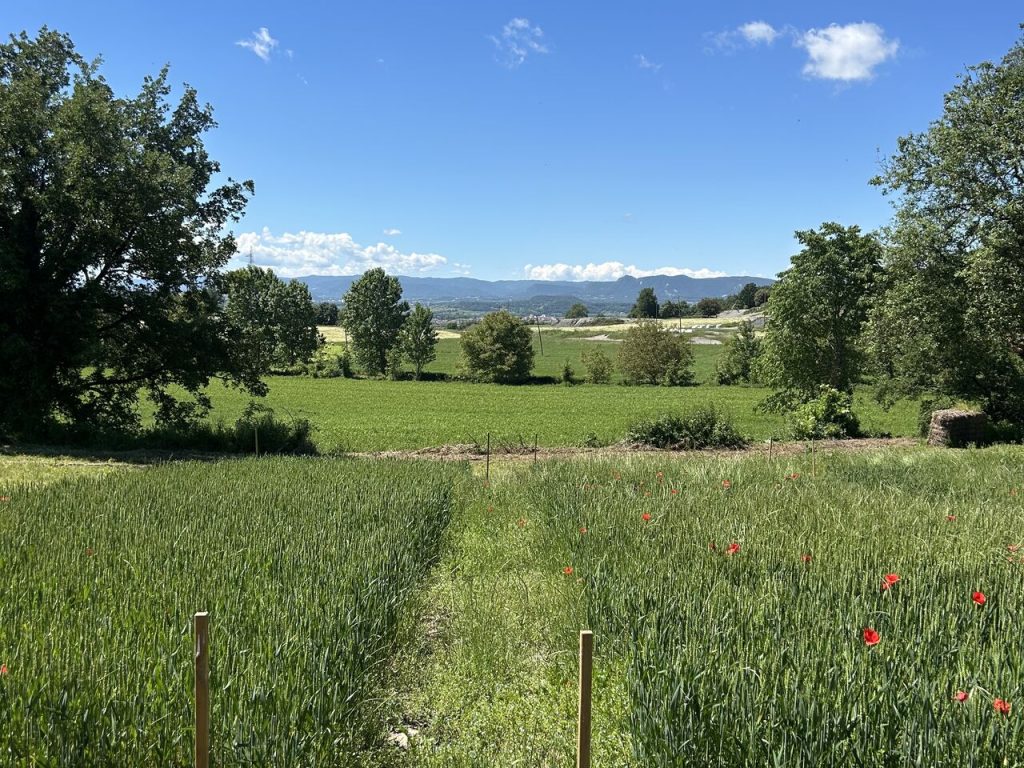
The formulations are now being tested under wheat cultivation in Central Catalonia, where SEACURE compares different TMFs with manure and conventional mineral fertilisation under equivalent nutrient inputs. Ongoing field trials will assess nutrient uptake, crop performance, and environmental effects, including nutrient losses, under real-life farming conditions.
For SEACURE, the longer-term ambition is to move beyond viewing fertilisation mainly as nutrient supply and towards more soil-specific nutrient management: better synchronising nutrient availability with crop demand, reducing nutrient surpluses in soils, and preventing pollution before it travels through soils and freshwater systems to the Mediterranean Sea.
👉 For more information on the session and emerging insights presented, take a look at the session programme.