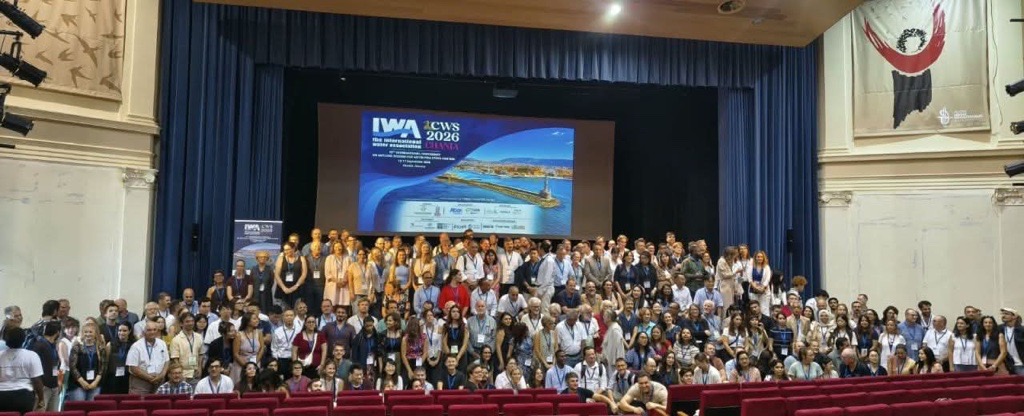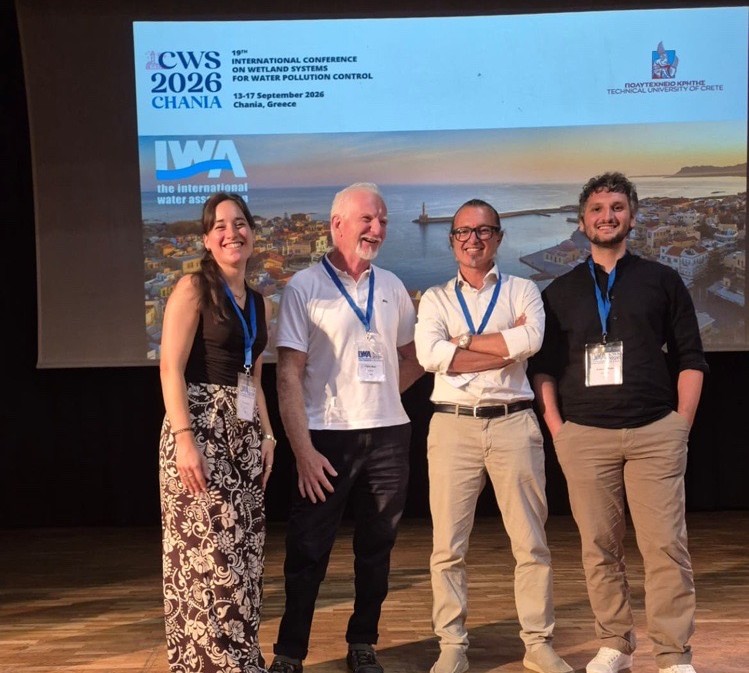
Constructed wetlands combined with microalgae offer a way to link wastewater treatment with nutrient recovery and agricultural water reuse. SEACURE brought this approach, together with lessons from its implementation, to the 19th IWA International Conference on Wetland Systems for Water Pollution Control (ICWS2026), held from 13 to 17 September 2026 in Chania, Greece.
Project partners Fabio Masi and Chiara Sarti from IRIDRA, contributing to the scientific programme and to a joint workshop examining the practical challenges of implementing Nature-based Solutions (NbS).
Combining wetlands and microalgae for circular water management
The contribution “Closing the Nutrient Loop with Nature-Based Solutions: An Integrated Wetland-Algal System for Circular Water Management in Mediterranean Conditions” presented the system designed for the Koilada wastewater treatment plant in the Thessaly Plain, SEACURE’s DEMO#4.
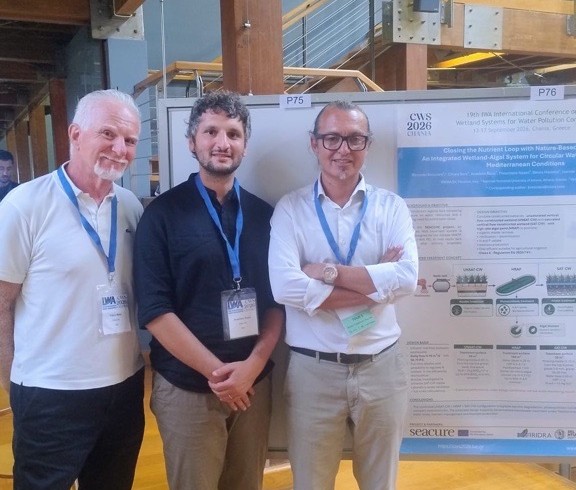
Developed by IRIDRA together with the National Technical University of Athens and Hydraspis, the approach combines two constructed wetland stages with a high-rate algal pond. It is designed to treat wastewater after primary treatment in a septic tank, using complementary biological processes.
In the first wetland, oxygen supports the breakdown of organic matter and the conversion of ammonium into nitrate. Microalgae in the pond then take up nitrogen and phosphorus as they grow, allowing nutrients to be recovered in harvested biomass. A final wetland supports further nitrogen removal and water polishing, followed by disinfection before storage for reuse.
The aim is to reduce nutrient loads while producing reclaimed water suitable for agricultural irrigation. The contribution outlined the system’s design and expected performance, based on laboratory-scale validation and process calculations; demonstration monitoring will be needed to assess performance under real operating conditions.
Learning from the realities of NbS implementation
Fabio Masi also contributed SEACURE’s experience to “What a Mess! The Reality of NbS Implementation in Horizon Europe Projects”, joining CARDIMED, NURISH, VERNE and HOUSEFUL. The workshop invited project teams to discuss the difficulties and adaptations encountered when bringing NbS to demonstration sites.
Drawing on Demo 4, SEACURE highlighted the gap that can emerge between budgets estimated during proposal preparation and construction costs several years later, particularly with inflation. The contribution also addressed longer implementation timelines and site-specific constraints that are difficult to predict fully at the outset.
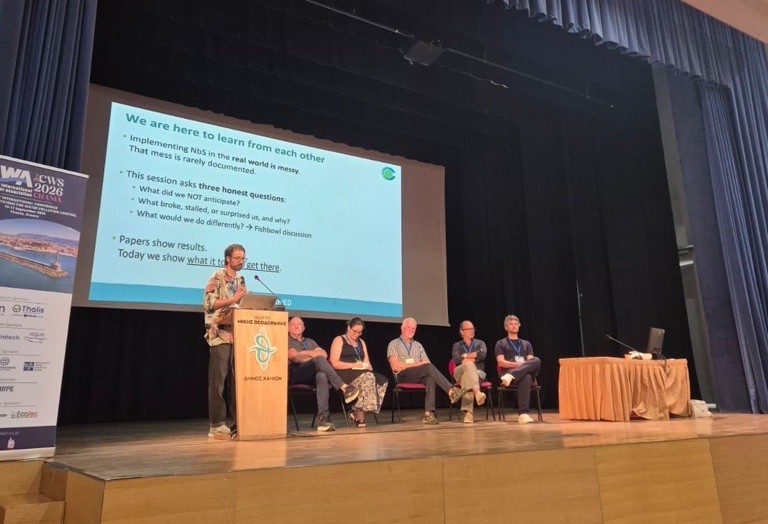
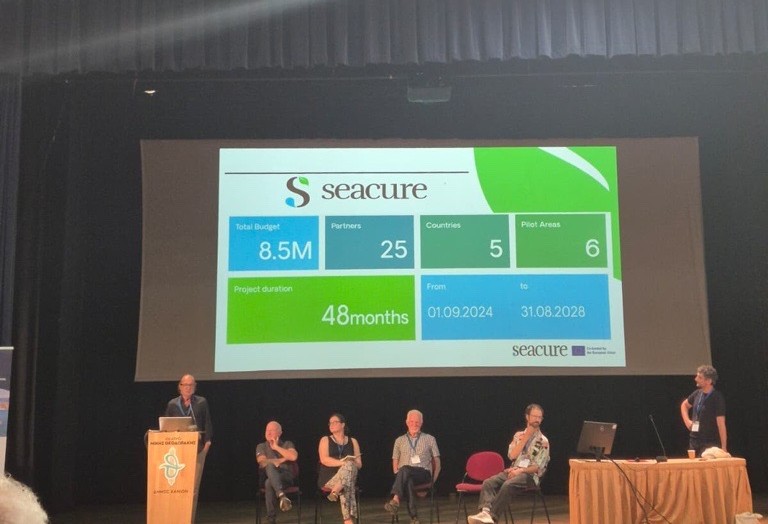
Exchanges like this turn individual project experiences into shared knowledge, helping other teams anticipate practical constraints and develop more realistic plans for implementation and replication. SEACURE will continue contributing to this collective learning, supporting more regions in applying Nature-based Solutions that address nutrient pollution while advancing nutrient recovery, water reuse and more circular management of local resources.
Together, the scientific contribution and workshop connected treatment design with the conditions needed to put it into practice, contributing to SEACURE’s work to prevent, reduce and remediate nutrient pollution across the Mediterranean land–river–sea continuum.