
SEACURE reaches a new demonstration milestone as BIOBOX, a biological denitrification technology, begins operations to remove nitrates from agricultural runoff before they reach the Mar Menor, Europe’s largest hypersaline coastal lagoon.
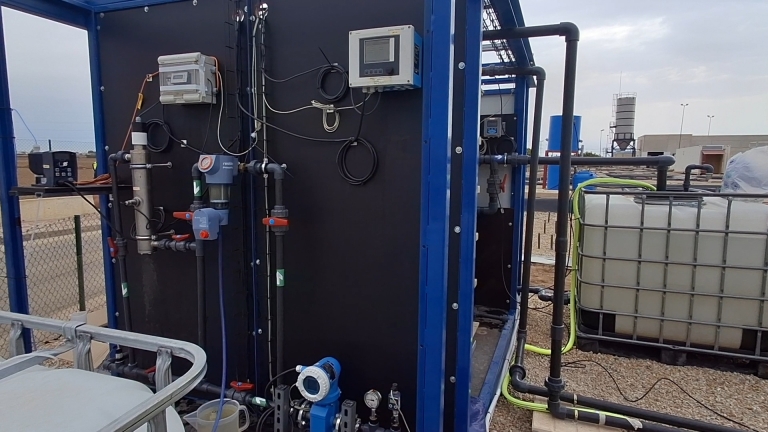
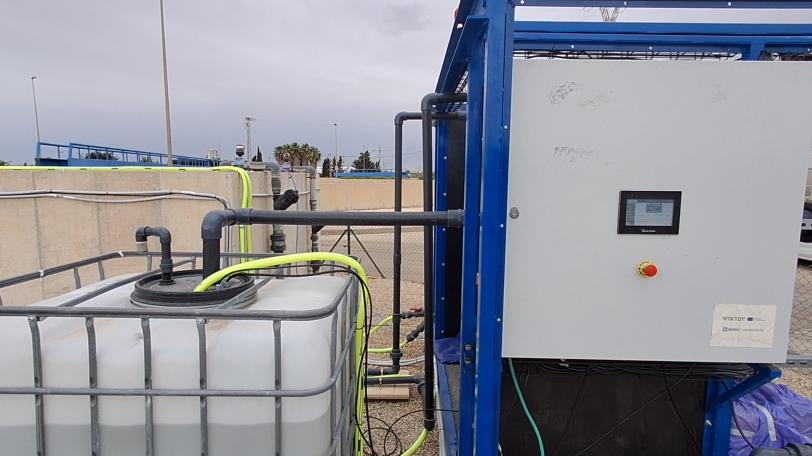
The SEACURE project has reached a major milestone in the Mar Menor lagoon (Spain) with the deployment of an innovative nitrate-removal technology designed to intercept nitrates from agricultural waters before they reach one of the Mediterranean’s most ecologically valuable and vulnerable coastal ecosystems.
Installed at the Los Alcázares Wastewater Treatment Plant (WWTP) in the Region of Murcia, the pilot constitutes SEACURE DEMO#1, led by INGEOBRAS in collaboration with CETENMA. Following installation and commissioning, the system is now operational and ready to begin validation.
Tackling nutrient pressures before they reach the Mar Menor
The installation marks the start of the technology’s validation under real operating conditions in the Mar Menor, where decades of nutrient inputs from the surrounding watershed have contributed to profound changes in the lagoon’s ecological condition.
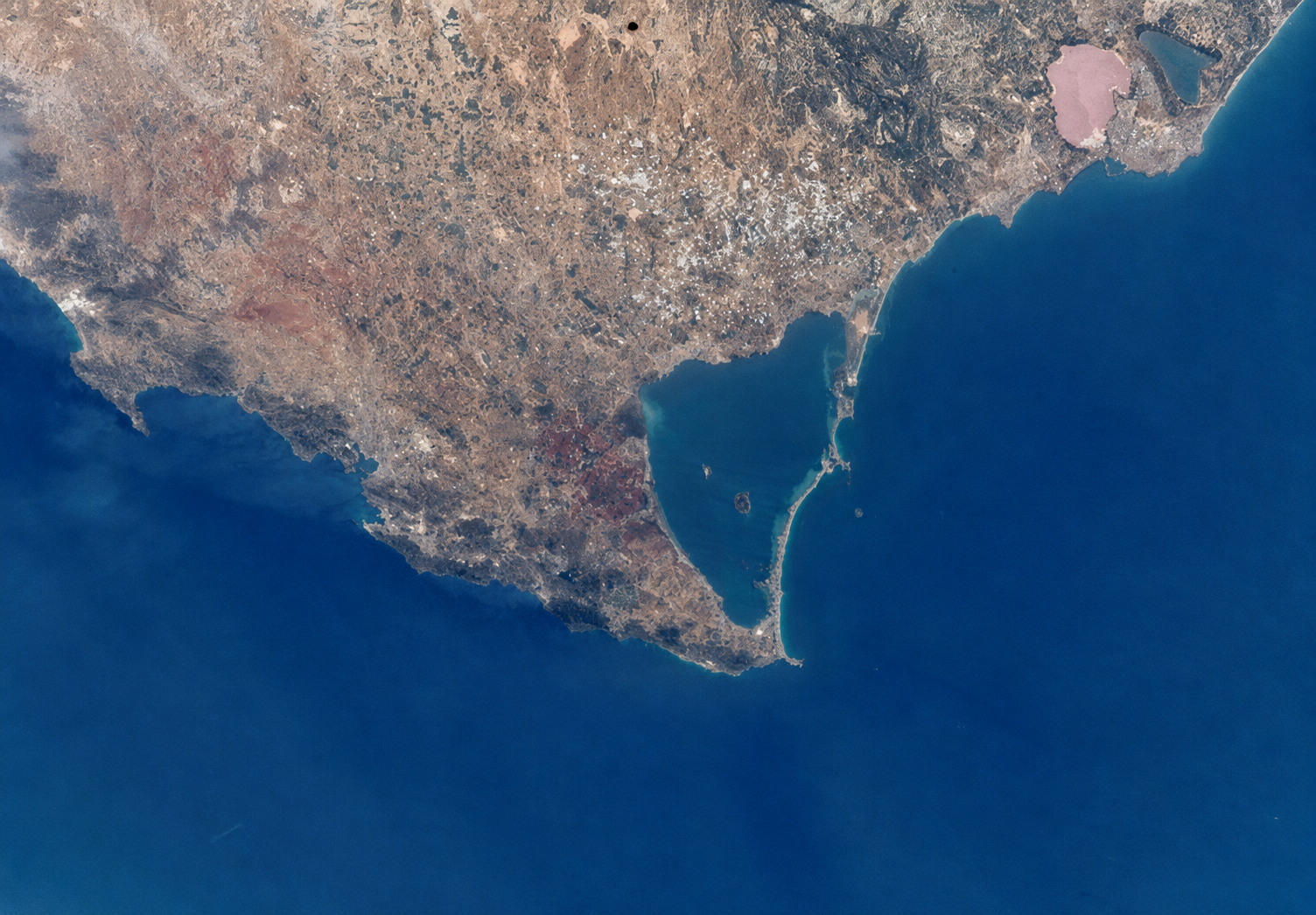
The pilot will treat agricultural waters associated with the D7 drainage canal, which carries nitrate-rich runoff from the intensively farmed Campo de Cartagena towards the Mar Menor. Reducing these nutrient loads before they reach the lagoon is particularly important in an ecosystem that has already shown how severely excess nutrients can disrupt ecological balance.
The Mar Menor is one of the Mediterranean’s most distinctive coastal lagoons and is protected under the Natura 2000 network. Its deterioration became especially visible during the 2016 “green soup” episode, when an intense phytoplankton bloom dramatically reduced water transparency and affected large areas of submerged vegetation. In the years that followed, episodes of severe oxygen depletion caused mass marine fauna mortality, reinforcing the urgency of reducing the pressures reaching the lagoon from its wider catchment.
Recovering the Mar Menor has since become a major environmental priority involving regional and national authorities, scientists, water managers, farmers and local communities.
How BIOBOX removes nitrates
At the heart of the demonstrator is BIOBOX Puremust-SN, a patented biological denitrification technology developed by INGEOBRAS. The system uses microorganisms and an organic carbon source to reproduce the natural denitrification process under controlled conditions, transforming nitrate present in the water into atmospheric nitrogen gas.
The technology has previously demonstrated nitrate-removal capacity in drinking-water and wastewater treatment applications. Within SEACURE, it has been adapted and scaled specifically for agricultural runoff with high nitrate concentrations, extending its application to a different type of water and operating context.
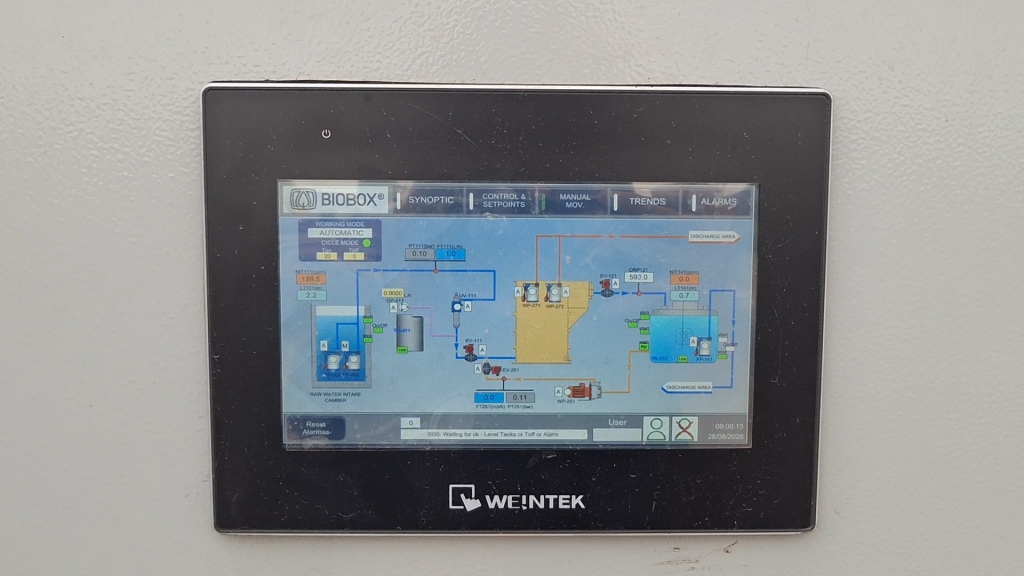
Designed as a complete and transportable treatment unit, BIOBOX integrates the biological reactor with the pretreatment, dosing, instrumentation, pumping, washing and control systems required for stable and automated operation. Its monitoring and automation system follows key parameters such as flow, pressure, water levels and nitrate concentrations, while supporting the automatic management of essential operating functions.
From installation to an operational demonstrator
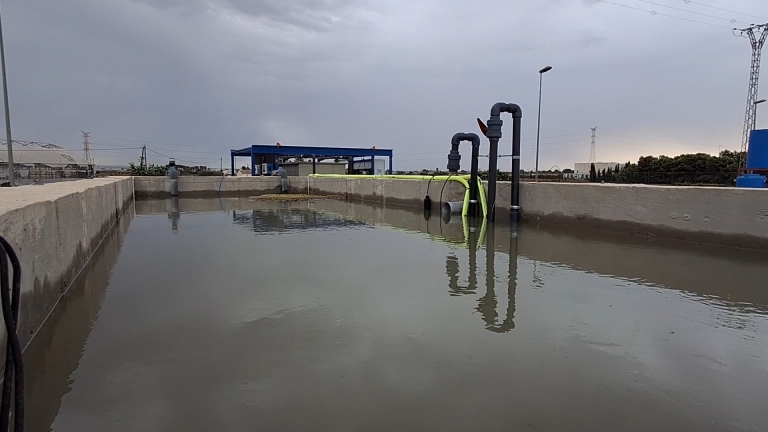
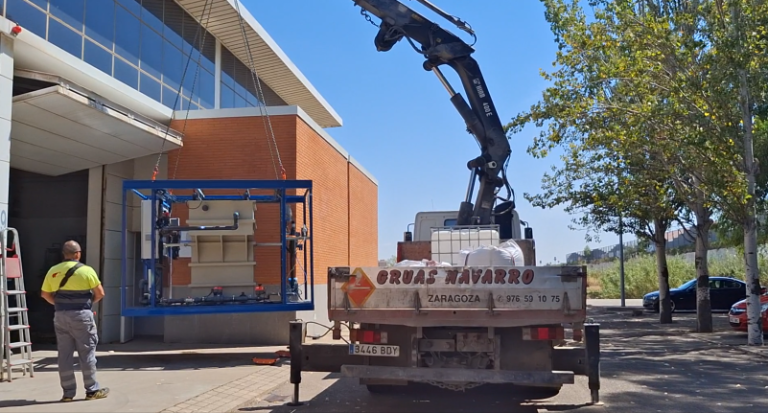
The BIOBOX pilot was designed as a complete and transportable treatment unit. After manufacturing and quality checks at INGEOBRAS facilities, it was transported to Los Alcázares WWTP, where the unit was positioned and integrated with the existing infrastructure
Commissioning then focused on verifying the system as a whole under operating conditions. The team adjusted the incoming water flow, checked the filtration system and process instrumentation, configured the dosing required for biological denitrification, and inoculated the reactor with denitrifying biomass. Backwashing and automatic operating functions were also tested before running the plant continuously for more than 24 hours to verify the integrated performance of the pilot.
Building evidence for future scale-up
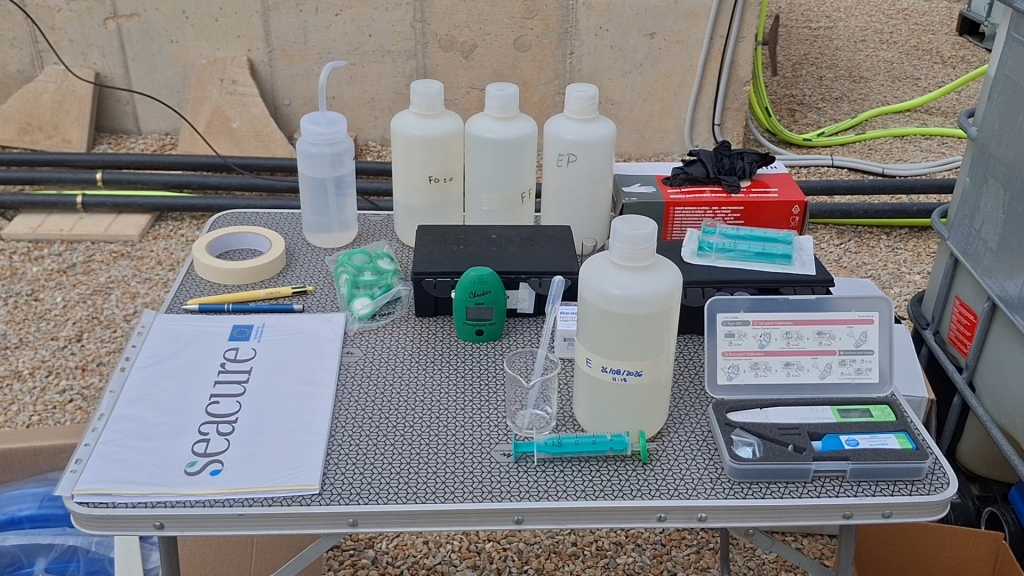
With installation and commissioning complete, the focus now moves to understanding how BIOBOX performs over time under the variable conditions of agricultural runoff. INGEOBRAS and CETENMA will monitor the system, progressively adjust operating parameters and assess not only nitrate removal, but also the stability of the biological process, filtration and backwashing requirements, maintenance needs and resource us.
The data generated at the Los Alcázares WWTP will help determine how the technology performs in the Mar Menor context and what would be required for application at a larger scale, while also informing its potential use in other settings affected by diffuse nitrate pollution.
The Mar Menor demonstration is one of six SEACURE demonstration regions across Spain, Italy and Greece, where the project is testing complementary solutions to address nutrient pollution across the full land–river–sea continuum.
The knowledge generated in DEMO#1 will therefore support both the assessment of the technology in the Mar Menor context and SEACURE’s broader objective of advancing practical, scalable responses to nutrient pollution across the Mediterranean.